Brighton and Hove Recovery Service

Get drug and alcohol support in Brighton and Hove

We are here to help – regardless of how alcohol or drugs are affecting you. You do not need to be dependent to use our services.

Your initial assessment will be on the phone. We will then invite you into our friendly Brighton and Hove service for a comprehensive assessment. After this, we will help you to decide the right route to your recovery goals. Your journey might include:
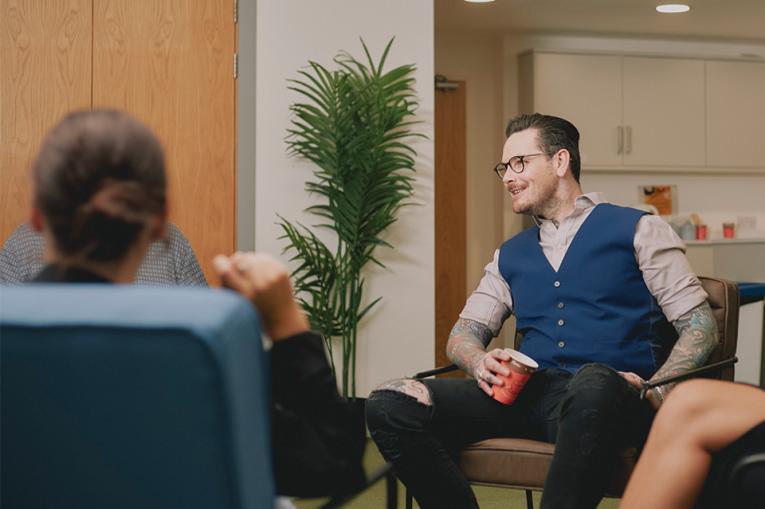
Neil sits in service relaxed drinking a coffee and chatting with colleagues

One-to-one support

A major part of our service is one-to-one support. You will be matched with a recovery coordinator who you will meet with regularly. Together, you will develop a care plan which will help you set and achieve your recovery goals.

Groups

We run a variety of groups every day of the working week. Some are geared towards established methods to recovery, such as the 12-step fellowship (Narcotics Anonymous, Alcoholics Anonymous, etc.). However, if they are not for you, there are plenty of alternatives. You can find out more below or discuss the options with your recovery coordinator.

All closed groups require a referral from your recovery co-ordinator or a member of the clinical team.

Locations: 

Richmond House: Richmond House, Richmond Road, Brighton, BN2 3FT

Cascades: Brighthelm Centre, North Road, Brighton, BN1 1YD

Holland Road Church: Holland Road, Hove, BN3 1JN

  • Mon

Monday

Time
Location
Activity
11:30
Richmond House

Speakeasy is a drop-in, informal mutual aid support group, facilitated by peer mentors.


The group offers a safe, non-judgemental space to explore recovery; the challenges, the successes, what helps, and everything in between. 

Exchanges with others who have been in similar situations can provide valuable insights and new perspectives on how to navigate your own journey.

13:30
Richmond House

12 Step Fellowship hosted mutual-aid group.

15:00
Richmond House

Self-Management and Recovery Training uses motivational and cognitive behavioural therapy techniques to get out from under dysfunctional behavioural habits that form addiction. 

The model uses a 4-point program: Building Motivation, Coping with Urges, Problem-Solving and Lifestyle Balance.

Tuesday

Time
Location
Activity
15:00
Richmond House

These sessions are designed as a drop in version of our closed ACT group, but the group will be more focused on the here and now and require no prior knowledge of ACT.
 

Acceptance and Commitment therapy uses both cognitive behavioural therapy (CBT) and mindfulness-based strategies. It aims to help you create a rich, full and meaningful
life whilst at the same time accepting the challenges that come with it. 

Coming from a personal values-driven perspective we aim to help you to develop tools to introduce
more psychological flexibility and emotional resilience into your life. 

Weekly content is repeated in the online group.

15:30
Richmond House

An introduction to the philosophy & approach of AA/12-Step Fellowships.

19:00
Online

This drop-in group aims to teach you some of the skills you can apply to your day-today life. 

These skills come from Dialectical behaviour therapy (DBT) which is designed to help you understand and accept your difficult feelings, learn skills to manage them and then become able to make positive changes in your life. 

‘Dialectical’ means trying to understand how two things that seem opposite could both be true. For example, accepting yourself and changing your behaviour might feel contradictory, but DBT teaches that it’s possible for you to achieve both these goals together. 

This is not group therapy, but more like a series of skills teaching sessions. There are four skill types we will cover: mindfulness, distress tolerance, interpersonal effectiveness and emotion regulation. 

Weekly content is repeated in the in-person group.

Zoom link:

https://us06web.zoom.us/j/84732925320

Wednesday

Time
Location
Activity
11:30
Cascades

The group offers a safe, non-judgemental space to explore recovery; the challenges, the successes, what helps, and everything in between. Exchanges with others who have been in similar situations can provide valuable insights and new perspectives on how to navigate your own journey.

13:00
Cascades

Self-Management and Recovery Training uses motivational and cognitive behavioural therapy techniques to get out from under dysfunctional behavioural habits that form addiction. The model uses a 4-point program: Building Motivation, coping with urges, Problem Solving and Lifestyle Balance.

15:30
Cascades

Compassionate Connections is a support group for recovery, grounded in Compassion focused Therapy. Exploring how we can navigate life’s challenges by building a compassionate mind. The group includes breathing and body exercises, workshops in compassion and shared experiences. You’ll gain resilience, deepen your understanding of yourself and find support within a compassionate community.

Thursday

Time
Location
Activity
11:00
Holland Road Church

Self-Management and Recovery Training uses motivational and cognitive behavioural therapy techniques to get out from under dysfunctional behavioural habits that form addiction. The model uses a 4-point program: Building Motivation, coping with urges, Problem Solving and Lifestyle Balance.

14:30
Richmond House

This drop-in group aims to teach you some of the skills you can apply to your day-today life. These skills come from Dialectical behaviour therapy (DBT) which is designed to help you understand and accept your difficult feelings, learn skills to manage them and then become able to make positive changes in your life.

‘Dialectical’ means trying to understand how two things that seem opposite could both be true. For example, accepting yourself and changing your behaviour might feel contradictory, but DBT teaches that it’s possible for you to achieve both these goals together. 

This is not group therapy, but more like a series of skills teaching sessions. There are four skill types we will cover: mindfulness, distress tolerance, interpersonal effectiveness and emotion regulation.


Friday

Time
Location
Activity
11:30
Richmond House

Speakeasy is a drop-in, informal mutual aid support group, facilitated by peer mentors. The group offers a safe, non-judgemental space to explore recovery; the challenges, the successes, what helps, and everything in between. 

Exchanges with others who have been in similar situations can provide valuable insights and new perspectives on how to navigate your own journey.

11:00
Online

These sessions are designed as a drop in version of our closed ACT group, but the group will be more focused on the here and now and require no prior knowledge of ACT. 

Acceptance and Commitment therapy uses both cognitive behavioural therapy (CBT) and mindfulness-based strategies. It aims to help you create a rich, full and meaningful life whilst at the same time accepting the challenges that come with it. 

Coming from a personal values-driven perspective we aim to help you to develop tools to introduce more psychological flexibility and emotional resilience into your life. 

Weekly content is repeated in the online group.

Zoom link:

https://us06web.zoom.us/j/91280408187 

13:00
Richmond House

An opportunity for you as service users to feedback on any issues about the service you receive in confidence. This group is attended by Service User Representatives, who being service users themselves can communicate feedback to the leadership team.

This group is held on the second Friday of every month. 

15:00
Richmond House

Self-Management and Recovery Training uses motivational and cognitive behavioural therapy techniques to get out from under dysfunctional behavioural habits that form addiction. The model uses a 4-point program: Building Motivation, coping with urges, Problem Solving and Lifestyle Balance.

Saturday

Time
Location
Activity
11:30
Richmond House

Speakeasy is a drop-in, informal mutual aid support group, facilitated by peer mentors. The group offers a safe, non-judgemental space to explore recovery; the challenges, the successes, what helps, and everything in between. Exchanges with others who have been in similar situations can provide valuable insights and new perspectives on how to navigate your own journey.

Support with drugs

Image and performance-enhancing drugs

Image and performance-enhancing drugs (IPEDs) are a range of substances including steroids (used for bodybuilding, keeping fit and enhancing perceived physical appearance) and ‘smart drugs’ (that may help concentration and focus).

Although increasingly popularised on social media, in gyms and on university campuses, regular use of these substances can result in unwanted and potentially harmful outcomes.

Find out more about IPEDs here. If you would like support around your use of IPEDs, we can help – just refer yourself.

If you would like to use our needle exchanges, a number of pharmacies will be able to help 

Needle and syringe programmes

Needle and syringe programmes are places where you can get new, clean injecting equipment and advice for staying safe. You can also return any used equipment so that it can be safely disposed of.

We also offer a needle and syringe programme by post, with the option of discrete packaging, for free.

Use the code:

11 40 00 58 22

If you want to access needle and syringe programmes in person, there are a number of options in the city. Look out for this logo, which shows where you can exchange your needles.

The Needle Exchange Logo. There is a Green arrow pointing right with a red arrow underneath pointing left. They sit in a Yellow circle which sits on a green background


Some local pharmacies offer a free needle and syringe programme:
A man stood outside smiling

Naloxone

Naloxone is life-saving medication that can reverse an overdose from opioids.

All pharmacies offer naloxone for free  - just ask at the counter. We also have stocks available at our service in Richmond House.

Find out more about naloxone.

Substitute medication

If you are using medication to help with your recovery, this is called medication-assisted treatment (MAT).

The medicines that we offer are methadone, buprenorphine and Buvidal therapy. The prescribing clinician will work with you to choose the best medication to suit your needs.

These medications can replace street drug use and will help to prevent relapse, reduce withdrawal symptoms and provide you with the long-term benefits of improved health.

When you first start your prescription, you will need to go to your pharmacy on a daily basis. Your prescription will need to be reviewed if you miss doses.

If you are planning on travelling we will need four weeks notice to help ensure your treatment can continue.

Two people in conversation with one slightly out of focus

Chemsex

Find out more about chemsex and how we can help with slamming packs and more support by clicking the link below.

Chemsex support

Support with alcohol

Three people laughing together outside

Detox

If you are drinking alcohol every day and notice unpleasant withdrawal symptoms when you are not drinking, please do not stop drinking suddenly. This can cause extremely harmful withdrawal symptoms.  

A detox will help you to withdraw from alcohol safely and comfortably. Find out about how detox works and what is involved at the link below.

What is a detox?