
Published on 24th February 2026
The DWP Peer Mentoring Service is a life-changing initiative to bridge the gap between job centres and recovery services. By supporting people to move forward with their recovery and achieve their goals, it is tackling stigma and transforming lives.
Danielle Diovisalvi was the Strategic Manager of the service when it first launched at Change Grow Live. She explains how the project is changing lives and helping people move forward with their recovery.
I’ve worked at Change Grow Live for 20 years, and the DWP Peer Mentoring Service is by far the best project I’ve worked on. It truly transforms lives.
The service pilot was developed in response to Dame Carol Black’s independent report on drugs, which called for better integration between treatment services and employment support.
People seeking work are often reluctant to talk about their issues with substances, and job centres don’t always have the framework to help them access the support they need. The Department for Work and Pensions (DWP) wanted to bridge the gap between job centres and recovery services like ours, helping people move forward in their treatment and get closer to employment.
Working with the DWP, we launched the pilot in five regions: Hull, London, North Wales, the Northwest and the Southeast. When job centres in these regions encounter people who could benefit from our peer mentoring, they refer them to us.
In most services, peer mentoring is a voluntary role, where people use their lived experience to act as role models and friendly guides to people accessing support.
What makes this project unique is that our peer mentors are trained and paid members of staff, all with lived experience of recovery. They work alongside people in recovery to offer them structured, one-to-one guidance and mentoring.
The mentoring they provide isn’t just about employment; it’s about helping people move forward, wherever they are on their journey. Some people are just beginning to ask for help; others are ready to take the next step. We work with them all.
It’s a person-centred approach, focused on helping people achieve their own goals – whether that’s accessing treatment, finding housing, applying for college or simply building a support network.
It’s also about reducing stigma. One of the first things I noticed when I took on this role was that many of the people we support had a very negative perception of job centres. A big part of what we do is education: challenging misconceptions and helping people see substance use through a more compassionate lens. Having our peer mentors in job centres helps with that; it brings a human aspect to the conversation and helps shift attitudes.
Voices from the frontline
One of the most powerful aspects of this project is the impact it has on our mentors. Many of them have lived experience of recovery, which they now use to help and support others.
Kirsty, who started as a peer mentor in Hull and is now a specialist women’s worker, shared her experience:
“I’ve been with the project from the very start and have been able to watch it develop and become what it is today, which I’m massively proud of. It’s made a massive impact on my life as well as the people I’m working with. For the people we work with, it gives them a purpose. It gives them hope. They feel valued and listened to. Everyone’s got lived experience and actually understands the barriers they face. It’s something you can’t learn.”
Kirsty also spoke about the ripple effect of mentoring:
"There are staff at Change Grow Live now that I mentored in the past. One of my mentees is now a DWP mentor himself. I promoted that early on: 'You could be sat here doing the same job as me.' It’s amazing to see that personal development.
I love being able to come to work and be myself. I was in addiction for a long time, and it’s something I was ashamed of. But now I can be open and honest, and that’s inspiring for the people I work with."
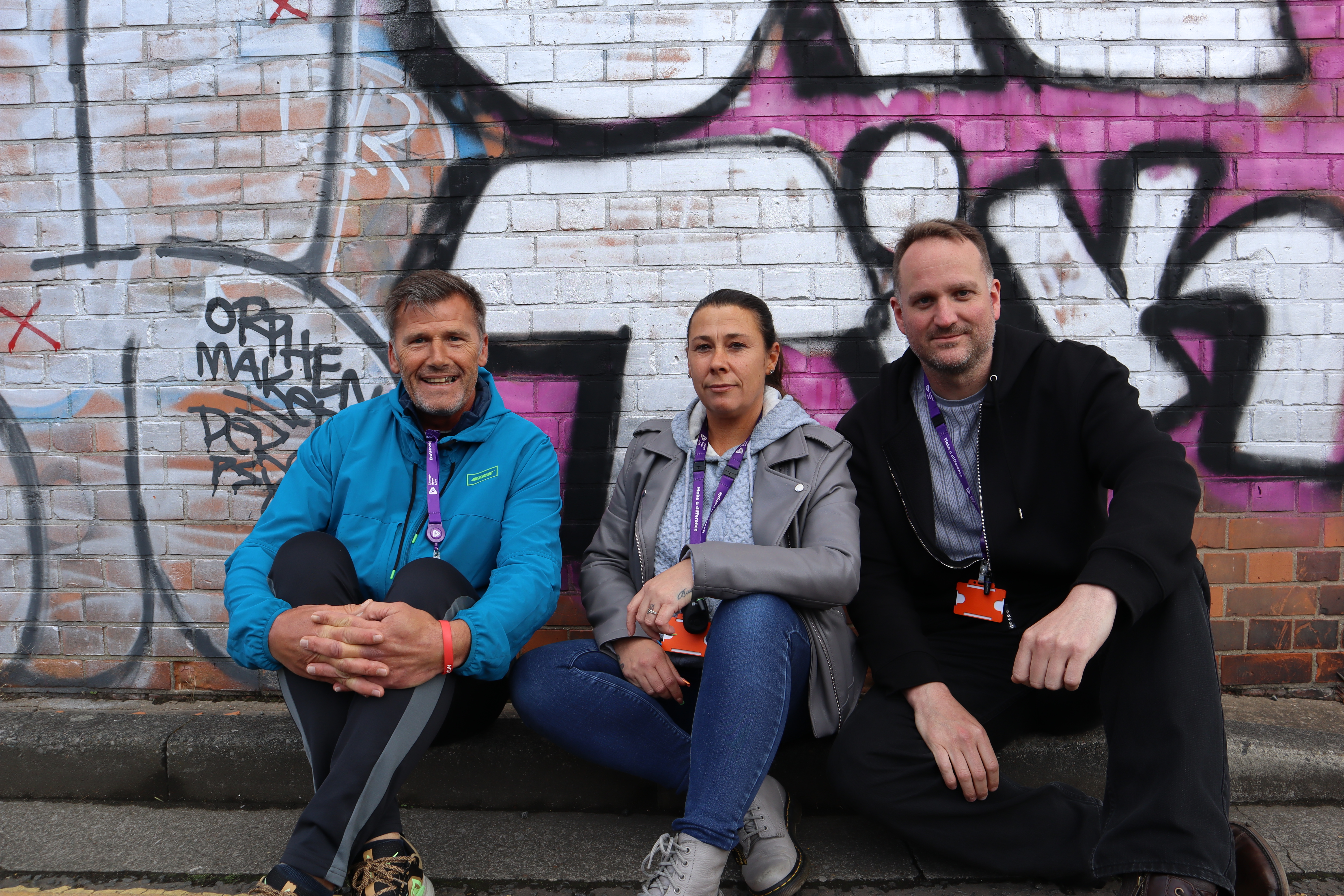
Three of the DWP Peer Mentors
Roxy, now Deputy Service Manager at Change Grow Live’s Camden service, was part of the implementation team and later a team leader. She described how the project became embedded in mainstream services through word-of-mouth recommendations:
"It happened very organically. A lot of staff heard from colleagues that the project can help with lots of different areas, which shows how valued the support is. Having a peer mentor consistently on site makes a huge difference. Recovery workers know they can go downstairs and chat with Sebastian. It’s not 'the DWP mentor', it’s 'Sebastian.'"
Roxy also highlighted how the pilot supports service delivery:
The support our mentors offer can’t be compared to any other service we work with. It’s extremely unique, and it relieves pressure from recovery workers. Instead of spending half a session dealing with letters and eviction notices, now we can focus on recovery."
Lives transformed
The stories from our mentors show just how transformative this project can be. Seb, one of our newer mentors, shared the journey of a woman who had been referred from the alcohol recovery service. She had successfully given up alcohol but was unsure about her direction. Seb helped her rediscover her passion for art.
"We found an Open University course that could lead to a Higher National Certificate," he recalls. "We secured funding through Universal Credit and got her a laptop. We also built a plan around yoga, gym and therapy. This is the longest period of sobriety she’s had. She thanked me for helping her find motivation and rediscover her love of art and culture.
Most importantly, she now has a clear path forward and a renewed sense of purpose."
Sebastian, a peer mentor based in Camden, supported a man who had lived in isolation for decades. He had severe social anxiety, low self-esteem, and undiagnosed dyslexia:
"We built trust and consistency. He disclosed childhood trauma and learning difficulties. We helped him consolidate debt, apply for personal independence payments, and access mental health support. He wanted to learn English and maths, so we got him into adult learning. His prescription hadn’t been reviewed in decades, so we visited the GP. His physical health, sobriety and outlook on life were transformed. He said mentoring gave him permission to stop leading such a restricted life."
The impact
The success of the DWP Peer Mentoring Service pilot is clear, not just in the stories, but in the data. We’ve had:
2,108 people referred for peer mentoring
204 people enter treatment
527 complete their mentoring
1,693 referrals to additional support services
205 referrals to employment support
76 people enter training
158 into volunteering
76 into education
42 into employment
And that’s just during the 8–10 weeks we work with them. Many go on to achieve even more after their mentoring ends.
We’ve also seen incredible progression among our mentors. Seven have moved into recovery coordinator roles, outreach work or specialist positions. Two are now team leaders. Roxy, one of our original team leaders, is now a deputy service manager. The growth is phenomenal.
We’ve learned a lot along the way about recruitment, training, support and inclusivity. We’ve had to adapt our policies and systems to better support staff with lived experience. We’ve built a one-team approach across regions and we’ve shared our learning with other providers.
This project works because of the amazing staff who live and breathe it. Every decision we make is guided by our values: what’s best for the mentees, the mentors and the mission."