
Published on 31st July 2026
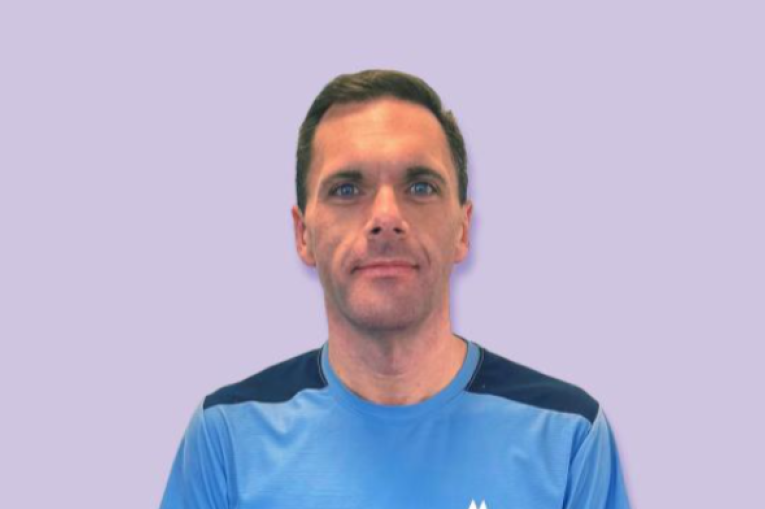
James Mawhinney is a Senior Social Worker in our Liverpool and St Helens service. Having spent many years working with young people and adults affected by the region's worsening ketamine crisis, he shares his insights with us - and explores what it can tell us about the future of drug use.
To receive insights like this straight to your inbox, you can subscribe to our newsetter.
In the years that I've been a social worker in St Helens and Liverpool, I have watched ketamine go from a marginal issue to defining feature of my work.
In supporting people to manage their use, I have encountered many unique stories. One that stands out to me was that of a teenage boy who told me he was giving ketamine away to his friends, for free.
When it comes to ketamine, I’ve learned that the consumer and the seller are often the same person. Like the boy that gave ketamine away for free, the incentive for dealing drugs may be friendship, not finance.
I’ve learned that people who use ketamine often do so to quiet the noise of a busy life, entangling the drug with anxiety, social pressures, trauma or neurodivergence.
My belief is that ketamine is more canary in the coalmine than crisis. Its complexity warrants more careful discussion than the panicked and alarmist snippets that news headlines allow.
It’s a glance at the future of drug use in our country: cheap, functional, unreliable, and moving through social groups too fast for healthcare services to keep up.
The question worth asking isn't whether we're alarmed enough; it's whether we're learning the right things while we still have time.
This is what I think ketamine reveals about the decades ahead.
Beyond the big night out
The fast-acting nature of ketamine, combined with the lessened effect of comedowns, makes it a drug particularly attuned to our busy and time-pressured modern world. People describe ketamine as something that steadies their mood, quiets a busy life, makes it easier to work or parent.
Ketamine defies many of the unhelpful stereotypes associated with drug use. I've long since abandoned the idea that there is a ‘typical’ ketamine user. If one exists, it is not the weekend clubber of popular imagination. In my work, I support everyone from teenagers to people in their fifties, from prisoners to professionals. What unites them is not who they are, but what they believe ketamine provides: relief, stability and a means to keep going.
This presents a challenge: when someone believes a substance is helping them function, stopping use is the loss of a coping mechanism.
More than with any other drug I work with, ketamine has forced us to rethink our approach. Many people are not using it to escape their lives, but to get through them. That means treatment cannot focus only on reducing or stopping use. It has to start with a deeper question: what is ketamine doing for this person that they feel they cannot do without?
Until we understand and address that underlying need, whether it is anxiety, trauma, stress, low mood or something else entirely, we are only treating the symptom, not the cause.
Square pegs, k-holes
The physical and cognitive impact of ketamine has forced us to rethink many of our default interventions, which have become inappropriate or obsolete.
Ketamine doesn't just affect the body; it affects a person's ability to engage with treatment itself. Difficulties with concentration, attention and working memory mean that many conventional interventions are poorly suited to the people who need them most. An hour-long psychosocial session, a 90-minute group, or a detailed harm reduction leaflet all assume a level of focus and retention that many people who use ketamine simply do not have at that point in their recovery.
To solve this, we have found ourselves learning from schools and teachers, who have been grappling with similar challenges for years. We are building more repetition into our work, breaking information into smaller chunks and finding different ways to reinforce key messages.
That is not about lowering the bar; it is about designing services around the reality of how people learn and retain information. If someone needs a follow-up text, a visual prompt or the same message repeated in different formats, that is not a failure of engagement. It is good service design.
What’s in a name?
A final, and perhaps most pressing, challenge is that I'm becoming less and less confident that the name of a drug tells us much about what's actually in it. Drug markets are increasingly unstable. Contamination is real. Substitution happens. The label on the bag is no longer a reliable guide to the substance inside.
The consequences are serious. Someone can be exposed to opioid-level overdose risk without ever believing they are taking an opioid. That is why I now find myself having conversations about naloxone with young people for whom, only a few years ago, it would have seemed completely irrelevant. This is not fearmongering; it is a recognition that the categories we have traditionally relied on – stimulant, dissociative, opiate – no longer map neatly onto the reality of what is circulating.
For many, ketamine use is not organised around clinical categories or levels of risk. It is organised around what their friends are taking, what is available, what feels safe and what seems to work.
The lesson is simple: if we want to influence behaviour, we have to start where people are, not where we'd like them to be. When the language of drugs no longer matches the lived experience of drug use, our messages become easier to ignore and harder to trust.
What next?
Ketamine is forcing us to confront realities that extend far beyond ketamine itself. It is showing us a drug market where social supply can matter more than organised dealing, where substances are used to function rather than to escape, where traditional treatment models do not always fit the people they are designed for, and where the name of a drug can no longer be relied upon to describe its contents.
The lesson is not that ketamine is uniquely dangerous; it is that it offers an early glimpse of where drug use, drug markets and drug services are heading.
If we pay attention, it can teach us how to build responses that are more flexible, more human and more grounded in the realities of people's lives. If we don't, we will spend the next decade trying to solve tomorrow's problems with yesterday's assumptions.
You can reach me at [email protected]